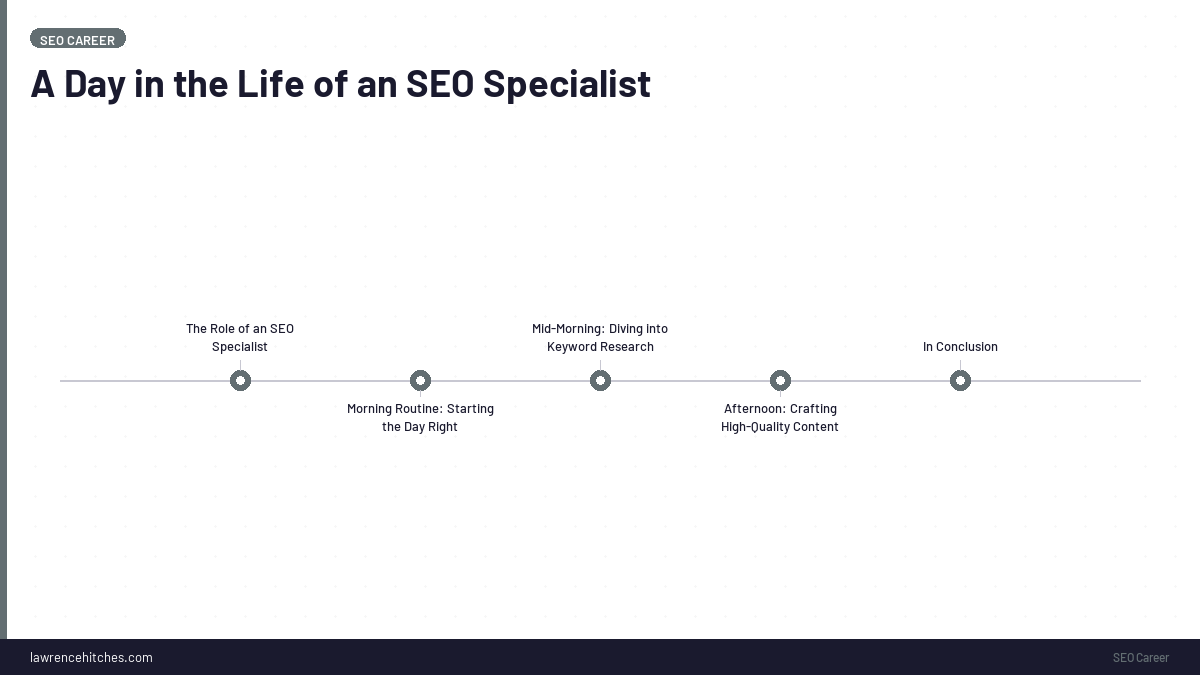
An SEO specialist spends a typical day on four kinds of work: reviewing performance data, researching keywords and search intent, producing or optimising content, and handling technical and reporting tasks. The 2026 version of the job adds a fifth thread that runs through all of it: monitoring and optimising for AI search, checking whether the brand is being cited in ChatGPT and AI Overviews, not just whether it ranks. The day is less about any single dramatic task and more about steady, measured iteration across a portfolio of pages.
What an SEO Specialist Actually Does
An SEO specialist is responsible for a website's visibility in search, both traditional rankings and, increasingly, presence in AI-generated answers. That responsibility breaks into recurring work: keyword and intent research, content optimisation, technical SEO, link building, and measurement.
The honest framing most "day in the life" articles miss: SEO is not a sequence of clever one-off moves. It is disciplined iteration. Most of the day is spent making measured improvements and checking whether previous ones worked. The skill is in prioritisation and judgement, not in any single task.
Morning: The Data Review
The day starts with data. Before touching any page, a specialist reviews what happened since yesterday: traffic, rankings, impressions, and conversions, usually in Google Search Console and an analytics tool.
This is not box-ticking. The morning review answers three questions: Did anything break? Did a recent change move the numbers? What is the highest-value thing to work on today? A page that dropped ten positions overnight reorders the whole day.
The output of the morning is a prioritised task list. Not everything that could be done, the two or three things that will matter most.
Mid-Morning: Research
With priorities set, the specialist moves into research, and in 2026 this is two jobs, not one.
Keyword and intent research. Identifying the terms a target audience uses, and, more importantly, the intent behind them. A keyword tool produces the list; judgement decides which keywords are worth pursuing, what format each needs, and where each fits the buyer journey.
AI search research. The new thread. The specialist runs target questions through ChatGPT, Perplexity, and Google AI Mode to see what those engines currently answer, which sources they cite, and whether the brand appears. This is now a standing part of the research block, because being cited in an AI answer is a distinct goal from ranking a page.
Competitor analysis runs alongside both: what competitors rank for, what they get cited for, and where the gaps are.
Afternoon: Content and On-Page Work
The afternoon is usually production: creating new content or optimising existing pages.
Optimisation work has a consistent shape: improve the page's match to search intent, strengthen the structure so both readers and AI engines can extract from it, tighten titles and meta descriptions, and fix on-page issues. A specialist rarely writes every word themselves; they brief and direct writers, then optimise the result.
The 2026 difference: content is structured for two audiences at once. A clear answer at the top of each section serves the human reader scanning the page and the AI engine extracting a citation. It is the same structure doing both jobs.
Late Day: Technical, Links, and Reporting
The final stretch of the day tends to be the less glamorous work that compounds.
- Technical checks. Crawlability, broken links, redirect issues, page speed, structured data. AI tools now handle much of the actual code; the specialist diagnoses and verifies.
- Link and authority work. Outreach, digital PR coordination, monitoring the backlink profile, and tracking brand mentions, which now matter for AI citation as much as links do.
- Reporting. Documenting what was done and what it produced. Annotating changes so the next data review can attribute movement correctly. This is the discipline that turns activity into learning.
The Skills the Day Demands
Across all of it, the same handful of skills carry the role: analytical judgement to read data correctly, prioritisation to spend limited hours well, communication to work through writers and developers, and the discipline to measure whether anything actually worked. Tool fluency and a working knowledge of how search and AI systems operate sit underneath all of them.
FAQ
What does an SEO specialist do all day?
A typical day covers four areas: reviewing performance data, researching keywords and search intent, producing or optimising content, and handling technical and reporting tasks. In 2026 a fifth thread runs through all of it: monitoring and optimising for AI search visibility.
Is being an SEO specialist a stressful job?
It is demanding rather than stressful for most. The work is steady and iterative, and results take weeks or months to appear, which suits people who like measured progress over constant urgency.
How has the SEO specialist role changed with AI?
Two main changes. AI tools now handle a lot of the execution (code, drafts, data processing), shifting the specialist's time toward judgement and verification. And AI search added a new goal: being cited in AI answers, which requires its own research and monitoring.
Do SEO specialists work with other teams?
Constantly. SEO work is executed through writers, developers, and designers. A large part of the job is briefing those teams clearly and coordinating the output.
What skills does an SEO specialist need most?
Analytical judgement, prioritisation, communication, and measurement discipline. Tool fluency and an understanding of how search and AI systems work support all of them. Coding is useful but not required.
Related Reading
- What Does an SEO Specialist Do?
- How to Become an SEO Expert in 2026
- SEO Career Path
- Does SEO Require Coding?
Sources & Further Reading
Enjoying this? The 60-second versions live on Instagram.
Follow @lawrenceaiseo →Soaring Above Search
Weekly AI search insights from the front line. One newsletter. Six sections. Everything that actually moved this week, with a practitioner's take.
AI SEO consultant and AI search consultant helping brands appear in AI Overviews, AI Mode and ChatGPT. Chief of Staff at StudioHawk, Australia's largest dedicated SEO agency. Runs a measured three-channel playbook: Google, Bing and AI citations. Book a free consultation →